Quick answer: which app should you pick?
There is no single “best” astrology app in India, and any list that gives you one is selling something. The right pick depends on the job you actually have. If you want to generate a Janam Kundli and dig into your Dasha and Navamsa yourself, AstroSage Kundli is the deepest self-service toolkit. If you want to talk to a live astrologer about a love, career, or marriage question, AstroTalk and Astroyogi are built around exactly that. If your daily need is Panchang, Muhurat, and Choghadiya, mPanchang is the practical pick. GaneshaSpeaks sits in the middle of horoscopes and consults. Co-Star is popular but it is Western/tropical, not Vedic Jyotish, so treat it as a different category. And if you want a calm, family-first Vedic app that shows its work and speaks Indian languages, that is where Drishti fits – I cover it in its own section below, not inside the competitor table.
How I judged the apps
I have spent years reviewing Indian astrology apps the way a reader actually uses them: install, generate a chart with real birth data, poke at the free tier until it asks for money, and see whether the reasoning holds up. Vanity metrics – star ratings, download counts, “50 million consultations” – tell you almost nothing about whether an app answers your question well. So I judged on three things that matter for Indian Vedic use.
Calculation and Kundli depth
For a Jyotish app, the chart is the product. I looked at whether an app generates a proper Vedic Kundli with the divisional charts you would actually reference – Rasi and Navamsa at minimum – and whether it exposes Dasha periods, planetary analysis, and options that serious users care about. AstroSage Kundli is the standout here: it offers Rasi and Navamsa, 36-point Ashtakoota matching, Dasha and planetary analysis, KP System and Lal Kitab, multiple ayanamsa options, and PDF export. Most consultation-first apps generate a free Kundli too, but the depth of self-service tooling varies a lot.
Human consults vs self-service tools
This is the biggest fork in the road. Some apps are marketplaces – their core is chatting or calling an astrologer. AstroTalk and Astroyogi are the clearest examples: both run on a “first chat free,” then wallet-recharge model for paid chat and call consultations. Others are tools you drive yourself, where a human consult is optional or absent. Neither is better in the abstract. A consult is right when you have a specific decision and want a person to weigh in; a self-service tool is right when you want to learn your own chart or check a Muhurat without paying per minute. Be honest with yourself about which you want before you download anything.
Language, privacy, and family use
India is multilingual, and an app that only works comfortably in English quietly excludes most of its users. Several apps advertise multilingual support, though exact language counts are unreliable – AstroSage’s own listings disagree with each other on the number, so I will not quote one. Privacy matters more than people assume: you are handing over your exact birth date, time, and place, which is sensitive data. And most Indian families do not consult astrology as individuals – they check a child’s chart, a match, an elder’s health. Very few apps are built around that family reality, which is a real gap in the market.
The apps compared
A quick housekeeping note on what I did NOT rank on, because it is what separates an honest guide from a copied top-10.
- No vanity metrics. I do not publish star ratings, download counts, review counts, or astrologer counts. Those numbers shift constantly and most floating around online are scraped from stale snippets. If a number matters to you, open the live store listing yourself on the day you decide.
- Pricing as a model, not a price. Every rupee price I saw was unreliable or region-specific. So I describe each app as “freemium” or “free with paid consultations” rather than quoting a figure that will be wrong next week.
- Marketing claims stay attributed. “#1”, “most accurate”, “Bharat’s Best” and similar are each company’s own words. I will tell you they said it; I will not repeat it as fact.
- Web-only tools are not apps. Products like TrustAstrology and Astrojyoti get name-checked in a lot of “best apps” lists, but they are websites with no verified mobile app. They do not belong in an apps comparison, so they are not in mine.
Quick comparison table
| App (store-accurate name) | System | Best for | Pricing model | Notable |
|---|---|---|---|---|
| AstroSage Kundli: AI Astrology | Vedic | DIY Kundli & deep tools | Freemium | Rasi/Navamsa, 36-point matching, Dasha, KP & Lal Kitab, PDF export; self-claims “#1 Astrology App” |
| Astrotalk – Talk to Astrologer | Vedic (+ Tarot, Numerology, KP, Nadi, Western, Palmistry) | Live astrologer consults | Free with paid consultations | First Chat Free, free Kundli/horoscope, AstroMall remedies; self-claims “India’s most accurate” |
| Astroyogi – Astrology & Kundli | Vedic (+ Tarot, numerology, vastu, palmistry) | Consults + quick Kundli | Freemium | First chat free, Janam Kundli & matching, Panchang, 24/7 |
| GaneshaSpeaks Kundli Astrology | Vedic | Horoscopes + consults | Freemium | Free Kundali, daily-yearly horoscopes, matching, Tarot/Numerology/Vastu; self-claims “Bharat’s Best” |
| mPanchang (Hindu Calendar, Kundli) | Vedic / Panchang | Panchang, Muhurat, matching | Freemium | Daily/monthly Panchang, Choghadiya, Rahu Kaal by location; Guna Milan; Android confirmed |
| Co-Star Personalized Astrology | Western / tropical (NOT Vedic) | Western natal charts | Freemium with paid add-ons | NASA ephemeris data, blunt AI copy, friend compatibility |
Store names differ across Play and the App Store for several of these – Astroyogi and GaneshaSpeaks especially – so use the store-accurate name for wherever you are downloading.
App-by-app notes
AstroSage Kundli
If you want to learn your own chart, this is the one I reach for first. AstroSage Kundli (its full store name is “AstroSage Kundli: AI Astrology,” from developer Ojas Softech) is the most tool-rich self-service Vedic app I have tested. It generates a proper Kundli with Rasi and Navamsa, runs 36-point Ashtakoota matching, and lets you go deep on Dasha and planetary analysis, with KP System and Lal Kitab options, multiple ayanamsa settings, and PDF export for your charts. There is also an AI astrology chat and paid astrologer consults on top of the free core.
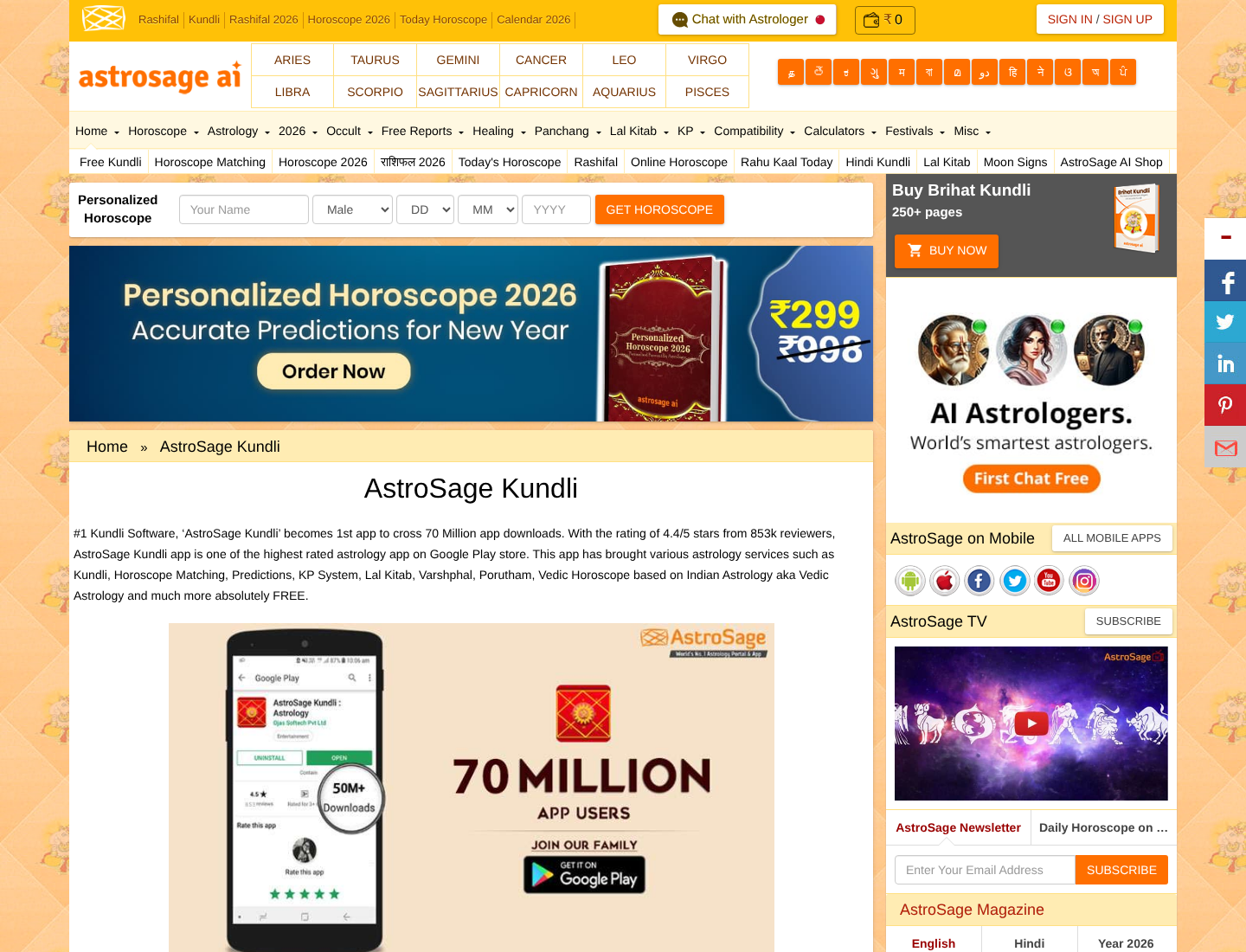
The pricing model is freemium: core Kundli and horoscope features are free, and premium reports plus consultations are paid in-app. The company markets itself as the “#1 Astrology App” – that is their positioning, not an independent finding. Right for you if you enjoy driving the tools yourself and want depth. Overkill if you just want someone to answer one question.
AstroTalk
Astrotalk (store name “Astrotalk – Talk to Astrologer,” from Codeyeti Software Solutions) is a consultation marketplace first. Its whole design points you toward chatting or calling an astrologer about love, career, marriage, or finance. There is a “First Chat Free” hook, plus a free Kundli and daily horoscope, but the paid heart of it is per-session consults funded by a wallet recharge. It spans multiple systems – Vedic, Tarot, Numerology, KP, Nadi, Western, Palmistry – and runs an “AstroMall” for remedies and gemstones.
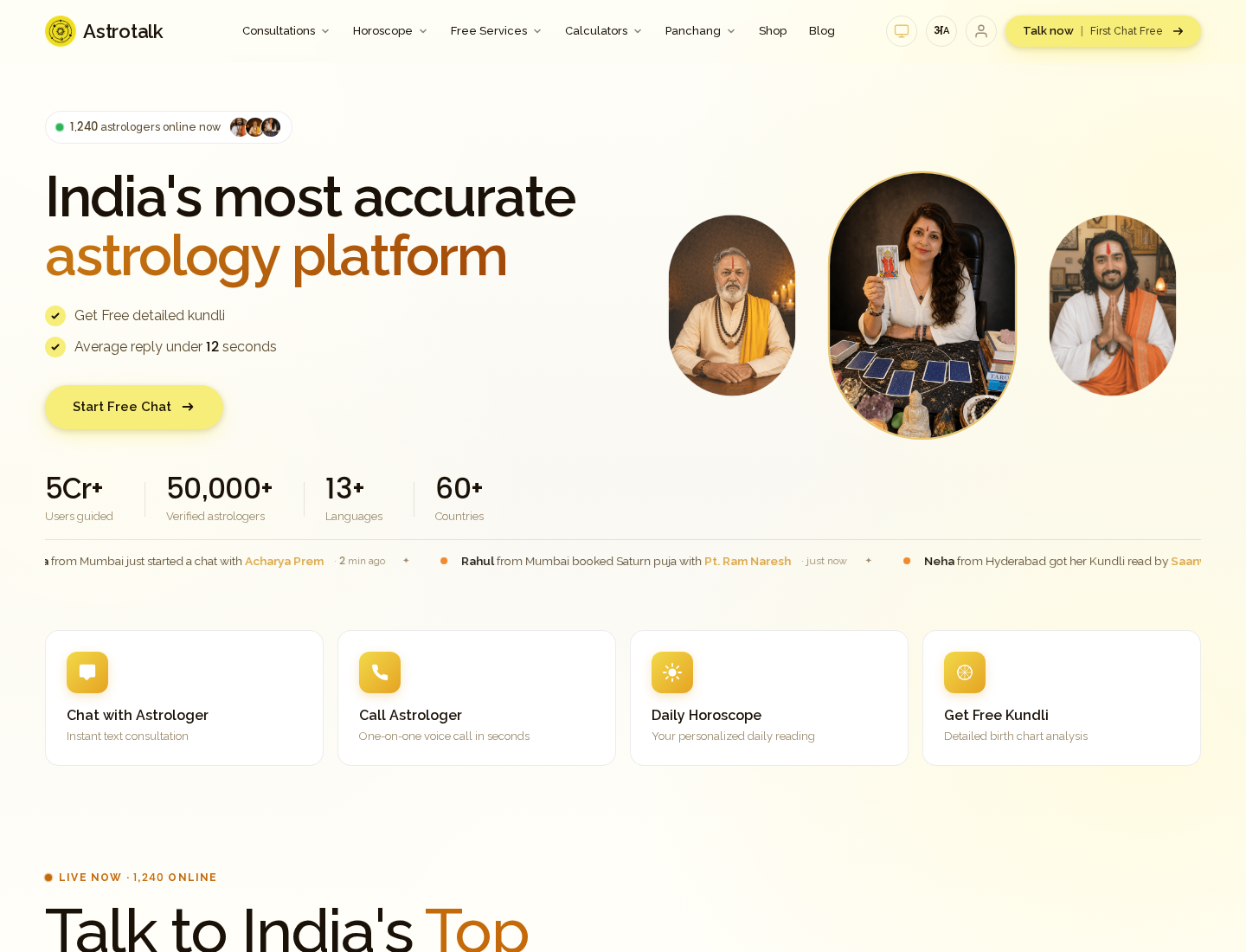
Its homepage calls it “India’s most accurate astrology platform.” That is a marketing claim and “most accurate” is not something anyone can assert as fact – if you care about the question of accuracy, I would judge the individual astrologer’s reasoning, not the tagline. Right for you if you want a human on the other end quickly. Not the pick if you want to explore your chart alone.
Astroyogi
Astroyogi (Netway India) straddles the line between quick self-service and live consults. Note the store names differ – “Astroyogi – Astrology & Kundli” on Play, “Astroyogi Chat with Astrologer” on the App Store – so grab the right one for your platform. It gives you free daily horoscope and annual predictions, instant Janam Kundli and Kundli matching, Tarot (1-card and 3-card), a Panchang, and chat or call with astrologers on love, marriage, career, and finance, promoted as 24/7.
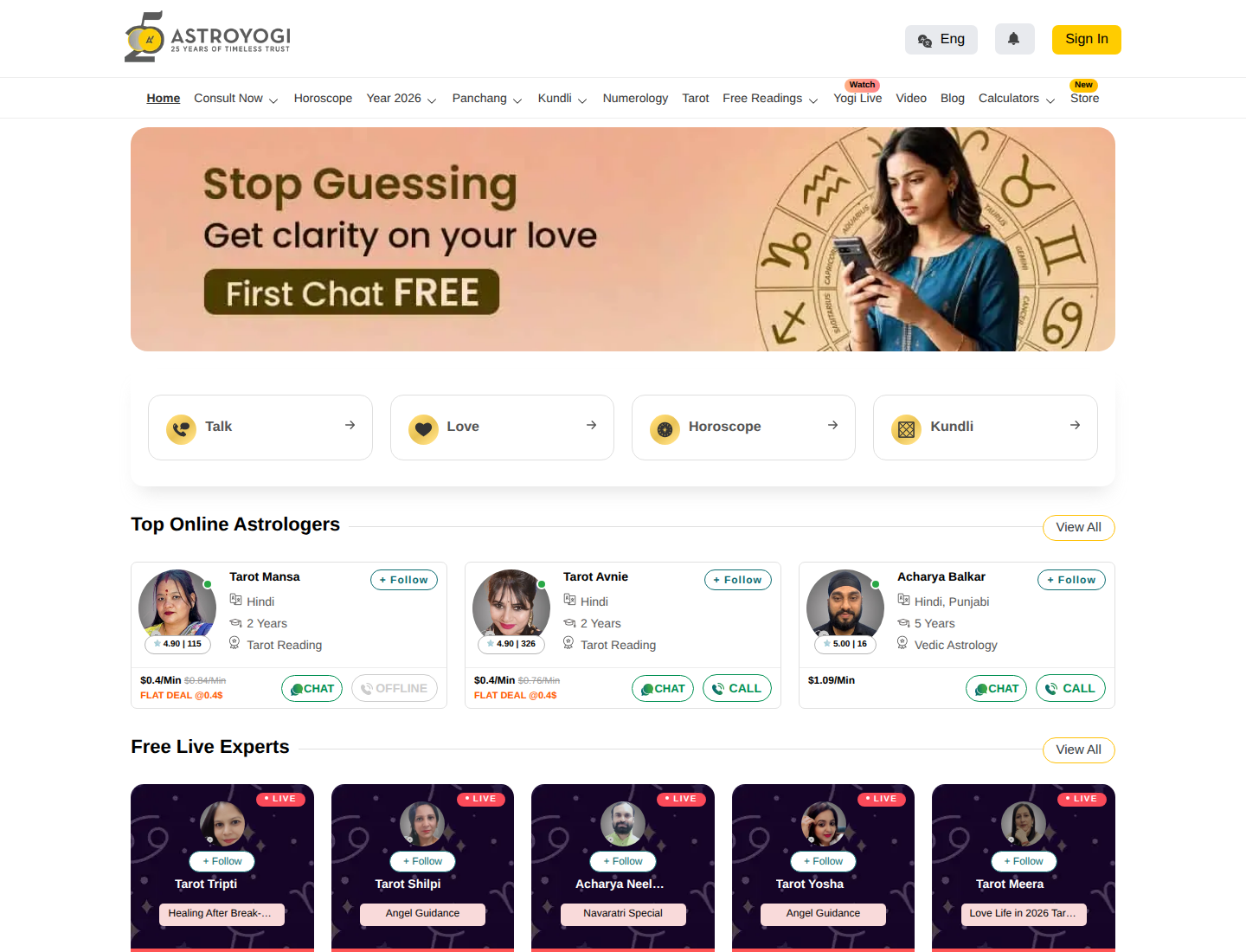
Pricing is freemium with a “first chat free” then paid chat/call. I saw a US App Store per-minute figure quoted for it, but that is region-specific and not an India rupee price, so ignore any converted number you see floating around. Right for you if you want both a quick chart and the option to escalate to a human.
GaneshaSpeaks
GaneshaSpeaks – built on the legacy of astrologer Bejan Daruwalla – sits comfortably between horoscopes and consults. Store titles vary (“GaneshaSpeaks Kundli Astrology” and similar on Play, “GaneshaSpeaks – Astrology Chat” on the App Store). It offers a free Kundali and birth chart, daily-to-yearly horoscopes, live chat and call with astrologers, Kundli matching and compatibility, plus Tarot, Numerology, Vastu, a Panchang with a festival calendar, and a remedies store.
It is freemium, with the first chat or call promoted free. The brand describes itself as “Bharat’s Best Astrology App” and cites “50M+ consultations across 180 countries” – both self-reported, neither independently verified, so read them as marketing. Right for you if you like horoscope-led daily reading with consults available.
mPanchang
If your real daily question is “when is a good Muhurat” rather than “what does my chart say,” mPanchang (PCVARK Software) is the practical tool. It is a Vedic Hindu-calendar app first: daily and monthly Panchang, Muhurat, Choghadiya, and Rahu Kaal calculated for your location, plus Kundli making and Kundli matching (Guna Milan), horoscopes, a full Hindu calendar with vrats and festivals, and devotional content like Aartis and Chalisas.
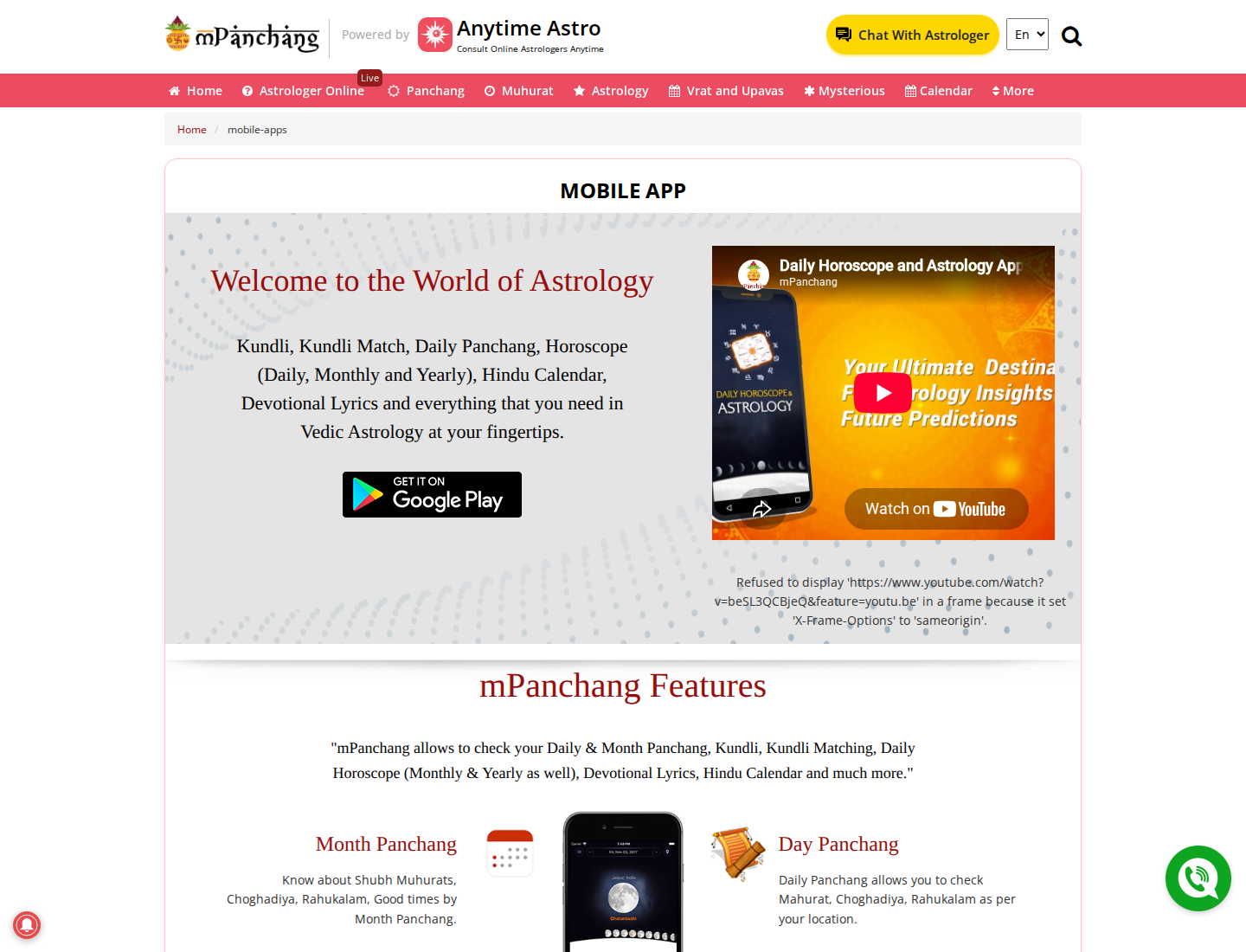
It is freemium – free to download, with paid reports promoted at varying discounts (treat those prices as volatile). One honest caveat: Android is confirmed, but I could not confirm a live Apple listing despite the official site claiming iOS, so verify before assuming it is on your iPhone. It calls itself the “No. 1 App for Hindu Calendar,” which is its own marketing line. Right for you for Panchang, Muhurat, and matching – less so for deep chart study.
Co-Star, clearly marked Western/non-Vedic
I include Co-Star because readers keep asking about it, but with a clear label: Co-Star is Western/tropical astrology, not Vedic Jyotish. It builds personalized natal charts and daily horoscopes from NASA ephemeris data with a mix of human and AI-written interpretation, and it is well known for its blunt AI copy and friend chart-comparison feature.
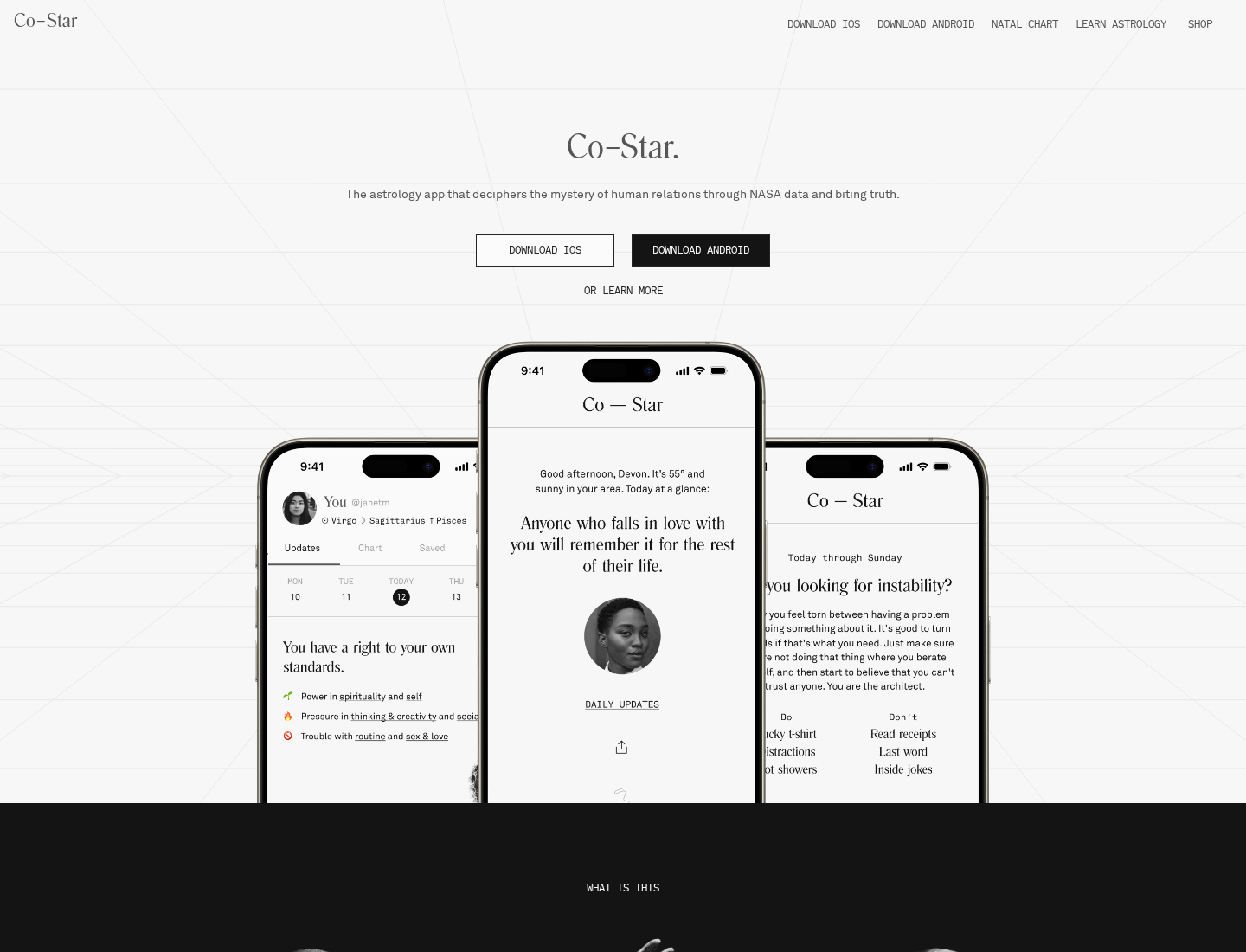
The framework is fundamentally different from a Vedic app: sun/moon/rising in a tropical zodiac, not the sidereal system with Nakshatras, Dashas, and Guna Milan that Indian astrology runs on. So it is not a like-for-like alternative to AstroSage or Astroyogi, even though it will show up in the same “astrology app” searches. It is freemium with paid add-ons. Right for you if you specifically want Western natal astrology. Wrong if you want a Kundli or a Gun Milan – it does not do those in the Jyotish sense.
Where Drishti fits
Everything above is a marketplace, a toolkit, or a Western app. Drishti is built for a different reader: the person who wants a calm, trustworthy family astrologer that shows its work, speaks your language, and never traffics in fear. That is why it earns its own section here rather than a checkmark in the competitor table – the whole point of Drishti is the posture, not a longer feature list.
Three things shape it. First, accurate Vedic Kundli generation with grounded, transparent reasoning – “showing its work” instead of handing you a verdict you cannot question. Second, family profiles, so you can hold multiple family members in one place rather than treating astrology as a solo activity, which is closer to how Indian households actually use Jyotish. Third, a multilingual, Indian-language intent – English first, with Hindi, Kannada, Tamil, and Telugu prioritised – and a privacy-first posture around the sensitive birth data you share.
The tagline says the rest: “Your Family’s Jyotishi.” It is deliberately not a fear machine. No doom, no urgency, no “what the stars have in store” theatrics – just decision support you can reason about. If that is the register you have been missing in the apps above, Drishti is worth a look.
How to choose based on your use case
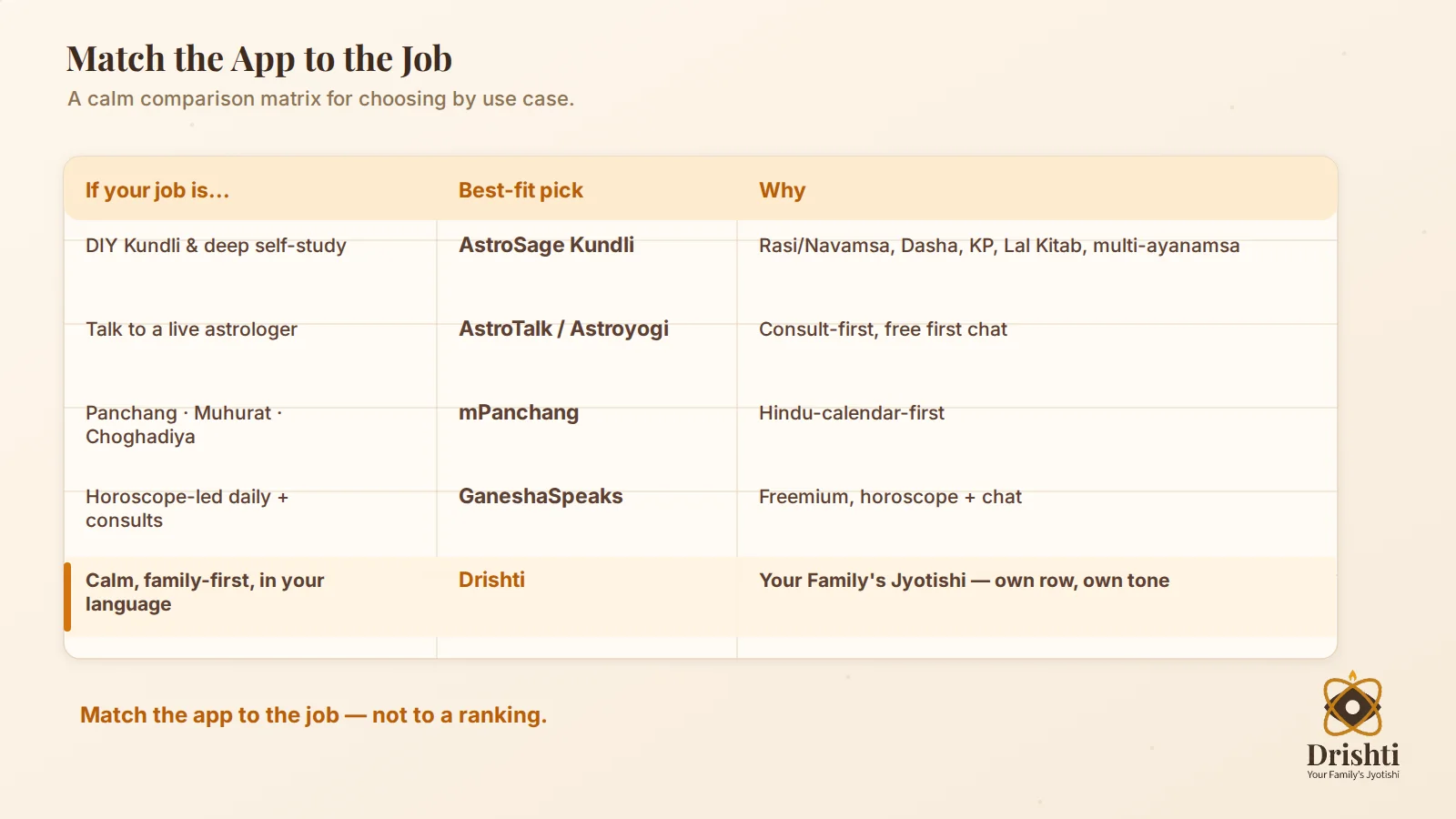
Match the app to the job, not to a ranking.
- You want to generate and study your own Kundli – Dasha, Navamsa, planetary analysis. Start with AstroSage Kundli. If you are new to it, our guide on how to read your Kundli walks through what those charts mean.
- You have a specific question and want a person to answer it. AstroTalk or Astroyogi, both consultation-first with a free first chat.
- You mainly need Panchang, Muhurat, and Choghadiya. mPanchang.
- You are checking a marriage match. Any Vedic app here does 36-point matching, but treat the score as decision support, not a verdict – see how Kundli matching actually works. No app can tell you a marriage “will fail,” and you should be wary of any that talks that way.
- You want the free tier to actually be usable. Most of these are freemium; the question is where the paywall sits. Our breakdown of free astrology apps and what “free” really means is the honest version.
- You care about accuracy claims. Ignore the taglines and judge the reasoning – more on how accurate Vedic astrology apps really are.
- You want a calm, family-first Vedic experience in your language. That is Drishti’s lane, and the reasoning behind family astrology and profiles is why it exists.
Pick the tool that fits the decision in front of you. That is the only ranking that matters.
FAQ
Which astrology app is best in India? There is no universal best – it depends on your job. For deep self-service Kundli and chart tools, AstroSage Kundli. For live astrologer consults, AstroTalk or Astroyogi. For Panchang and Muhurat, mPanchang. For a calm, family-first Vedic app in Indian languages, Drishti. Choose by use case, not by a top-10 headline.
Which astrology app is most accurate? No app can be objectively crowned “most accurate,” and several market themselves that way – AstroTalk calls itself “India’s most accurate,” GaneshaSpeaks “Bharat’s Best.” Those are self-descriptions, not independent findings. Accuracy in practice comes down to correct chart calculation and sound reasoning by the astrologer or the app, which you can only judge yourself against a chart you already understand.
Are astrology apps free? Most are freemium – free to download, with a free Kundli or horoscope, and paid layers on top (premium reports, or per-session consults funded by a wallet recharge). “Free with paid consultations” describes the consult-first apps like AstroTalk and Astroyogi. Exact prices shift often and vary by region, so check the live listing before you pay.
Which app is best for Kundli? For generating and studying a Janam Kundli yourself, AstroSage Kundli is the most tool-rich: Rasi and Navamsa charts, Dasha and planetary analysis, matching, multiple ayanamsa options, and PDF export. Most consultation apps also produce a free Kundli, but with less self-service depth.
Is Co-Star a Vedic astrology app? No. Co-Star is Western/tropical astrology built on NASA ephemeris data – sun, moon, and rising signs – not the sidereal Vedic Jyotish system with Nakshatras, Dashas, and Guna Milan. It is popular and well made, but it is not a like-for-like alternative to a Kundli app, so do not use it expecting Vedic features.
Which app is best for family astrology? Most apps treat astrology as a solo, one-profile activity, which is a poor fit for how Indian families actually use it. Drishti is built around family profiles – holding multiple members in one place – with a privacy-first, anti-fear posture and Indian-language intent. That family framing, under the tagline “Your Family’s Jyotishi,” is what sets it apart for household use.